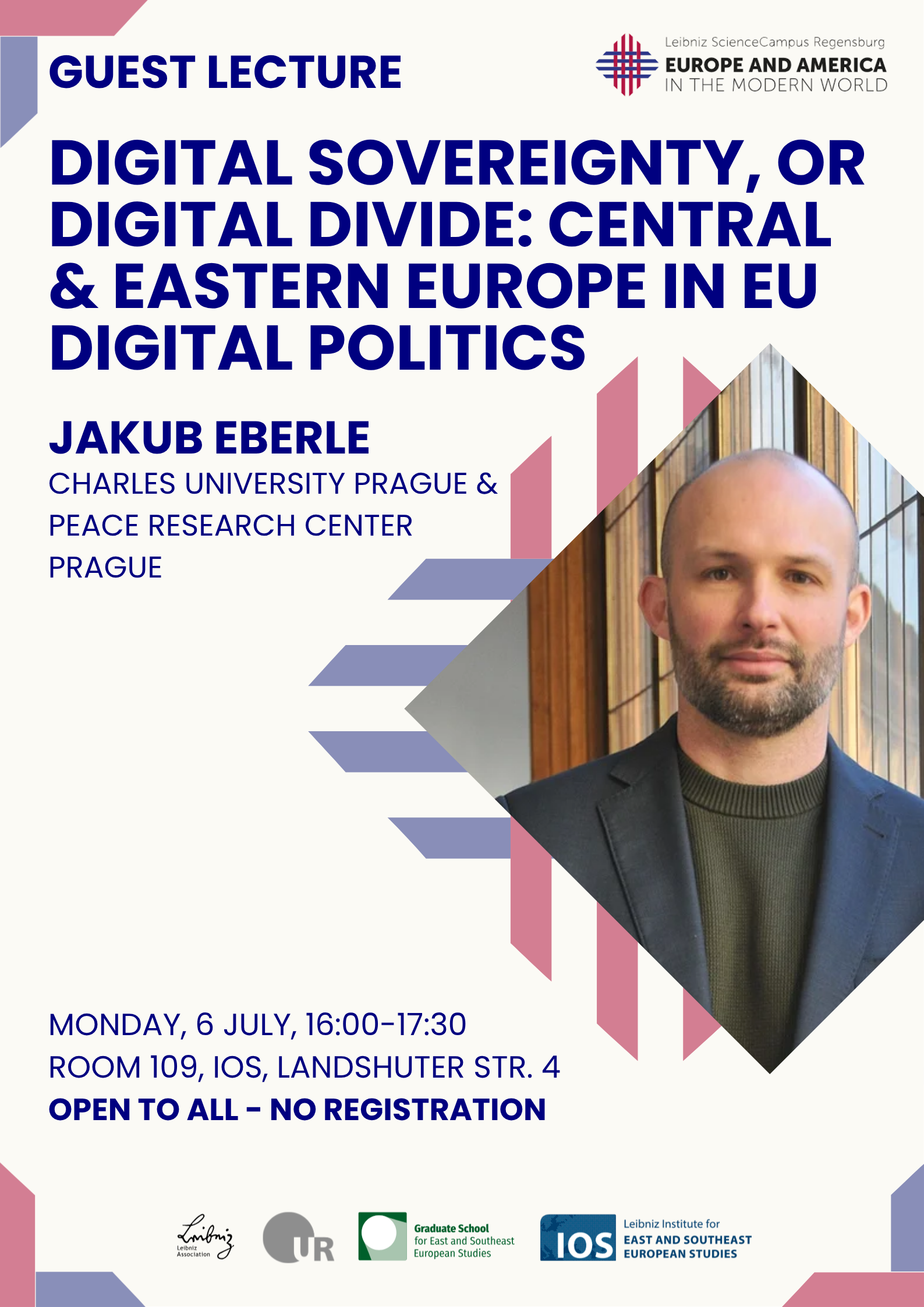
eVENT INFORMATION
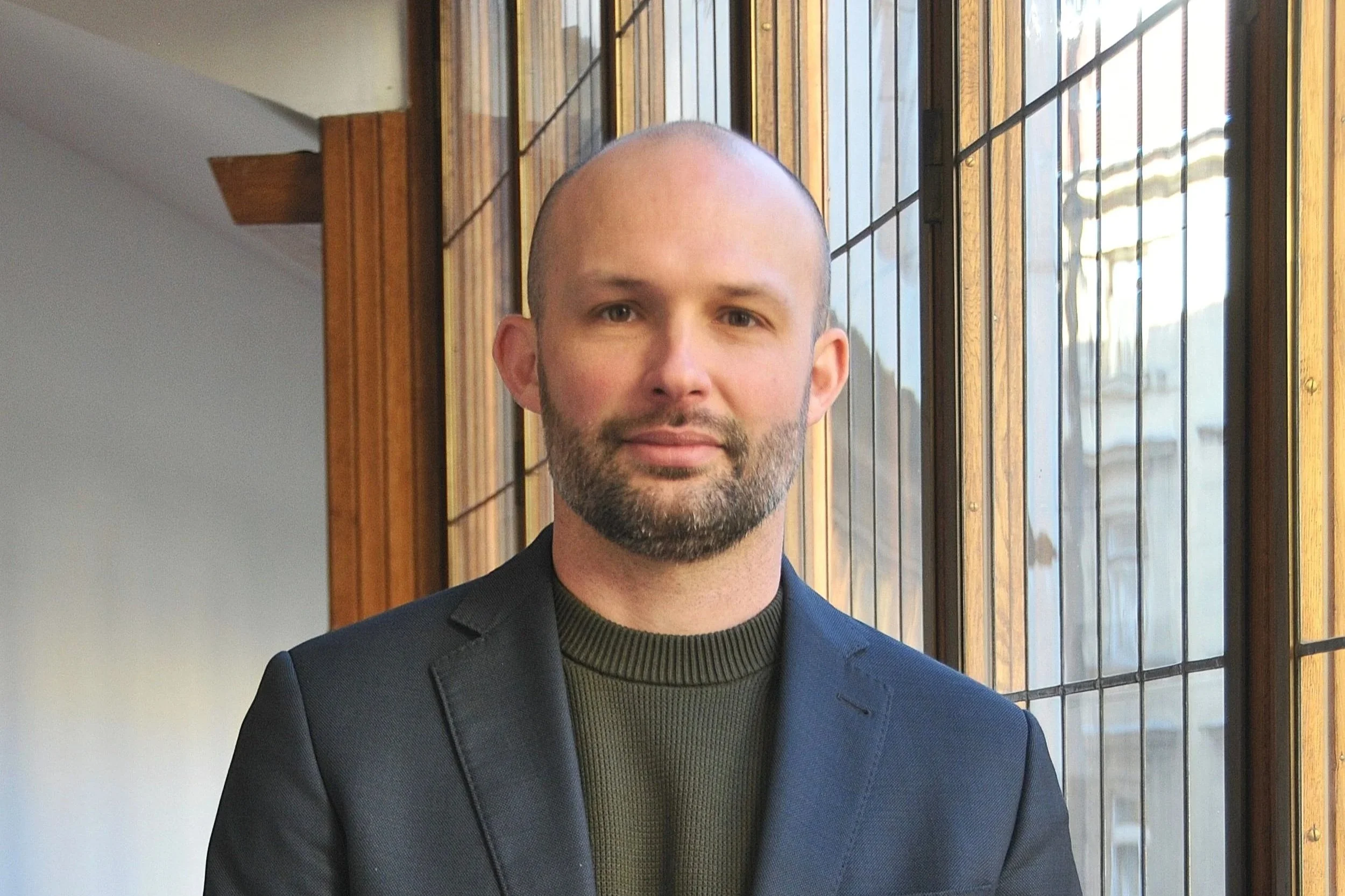
Jakub Eberle, a Senior Researcher at the PRCP, will be a visiting researcher at the Leibniz Institute for East and Southeast European Studies between June 27th and July 19th 2026. During his stay, he will be delivering a guest talk at the Leibniz ScienceCampus on the topic of digital sovereignty in Central and Eastern Europe.
No registration required.
ABSTRACT
Digital Sovereignty (DS) has become a key notion in EU politics. Confronted with China’s ‘digital authoritarianism’ and the ‘technofeudalism’ of Sillicon Valley, Europe is trying to find its own way to be more autonomous in both security and economy. Yet, what if the very initiatives that are supposed to make Europe sovereign, secure and competitive in relation to external powers had the opposite results within the EU, contributing to growing intra-European digital divides? This lecture will bring forward the key arguments of a larger research project, which looked at the position of Central and Eastern Europe in EU digital politics. Using insights from postcolonial and dependency thinking, I will argue the current shape of the EU digital sovereignty reinforces existing core-periphery divides. This is an issue for the legitimacy of EU digital policies, even potentially further undermining the cohesion of the EU as such.
The talk is organized in cooperation with Fabian Burkhardt and the IOS Politics Department.
BIO
Jakub Eberle is Associate Professor at the Institute of International Studies, Charles University, and Senior Researcher at the Peace Research Centre Prague. Jakub's research is situated at the intersection of international relations theory, social theory and politics of Central Europe. In particular, he is interested in the questions of ontological security, politics of subjectivity, discourse and emotions, critical security studies, hybrid warfare, digital sovereignty, as well as Czech and German foreign policy.
He is the author or co-author of three monographs and more than a dozen articles published in International Political Sociology, International Studies Review, Foreign Policy Analysis, Political Geography, Political Psychology, and elsewhere. He had lectured at universities in Antwerp, Warwick, Düsseldorf and Prague.